


| Issue |
J Extra Corpor Technol
Volume 58, Number 2, June 2026
|
|
|---|---|---|
| Page(s) | 146 - 163 | |
| DOI | https://doi.org/10.1051/ject/2026009 | |
| Published online | 19 June 2026 | |
Review Article
Scoping review of contemporary adult venoarterial extracorporeal membrane oxygenation (VA ECMO) selection criteria and decision-making mechanisms
Kelowna General Hospital, Kelowna, Canada
* Corresponding author: This email address is being protected from spambots. You need JavaScript enabled to view it.
Received:
17
September
2025
Accepted:
30
March
2026
Abstract
Adult venoarterial extracorporeal membrane oxygenation (VA ECMO) is a costly life support therapy, where patient selection remains a significant hinge-point in determining patient outcomes. Despite this, few sites have formalized patient selection criteria, and even fewer have a robust multidisciplinary ECMO team to determine patient candidacy. Analyzing current literature revealed weaknesses in existing research on VA ECMO patient selection criteria. Significant issues include the use of small sample sizes, lack of randomized controlled trials, lack of personalization of ECMO initiation decisions, study heterogeneity, and inclusion of patients who received ECMO without including patients who were considered for but not given ECMO. Among the available studies, the Survival After Venoarterial ECMO (SAVE) score has shown the greatest promise in selecting VA ECMO patients, excluding those undergoing extracorporeal cardiopulmonary resuscitation (ECPR) and postcardiotomy (PC) ECMO. The SAVE score has demonstrated good discrimination in non-ECPR and non-PC ECMO groups. Further research is needed on the predictive value of SAVE score risk classes and the discrimination of the SAVE score excluding PC ECMO and ECPR groups. The modified SAVE score, which also includes lactate assessment, has shown the greatest promise for selecting ECPR and PC ECMO patients for VA ECMO. The modified SAVE score requires more external validation. Site-level research indicates that consultation with a multidisciplinary ECMO team, which collectively makes decisions about ECMO candidacy, has resulted in significantly improved patient survival outcomes compared with a one- or two-physician decision-making mechanism for VA ECMO initiation. The ECMO team approach is a rich area for future research, and sites should publish their patient outcomes before and after implementation.
Key words: Venoarterial extracorporeal membrane oxygenation / ECMO team / ELSO / ECMO patient selection / SAVE score / Modified SAVE score
© The Author(s), published by EDP Sciences, 2026
 This is an Open Access article distributed under the terms of the Creative Commons Attribution License (https://creativecommons.org/licenses/by/4.0), which permits unrestricted use, distribution, and reproduction in any medium, provided the original work is properly cited.
Introduction
In venoarterial extracorporeal membrane oxygenation (VA ECMO), robust selection criteria identifying adult candidates who benefit are lacking [1]. All types of ECMO, including extracorporeal cardiopulmonary resuscitation (ECPR), VA, and venovenous (VV) ECMO, have been considered a last-resort salvage therapy for patients in critical condition as a bridge to heart and/or lung recovery, bridge to heart and/or lung transplant, or bridge to a long-term therapy such as Ventricular Assist Device (VAD) [2]. Experts have attempted to develop patient selection criteria for ECMO, but have yet to reach a universal consensus [3]. Universal guidelines have not been established due to factors such as lack of robust research evidence, regional patient heterogeneity, diverse clinical settings, proximity to a large transplant center, resource availability, the diverse and complex pathologies that patients present with, as well as the differentiation of selection criteria required for the ECMO-requiring pathology itself [4–6]. Life support with ECMO often poses considerable risks to patients, such as neurological deficit, stroke, and loss of limbs, up to and including death, which should deter gratuitous use by clinicians [7–10].
According to the Extracorporeal Life Support Organization (ELSO) [11], which contains the largest repository of national and international ECMO data, US adult ECMO survival rates until decannulation or hospital transfer are as follows: VV-ECMO, 59%; VA-ECMO, 46%; and ECPR, 30%. Longer-term data from a single-center study showed that the 5-year survival rates were 33% and 36% for VA ECMO and VV ECMO patients, respectively [12]. The study reported that 29% of surviving VA ECMO patients and 75% of surviving VV ECMO patients had great difficulty with basic daily living activities [12]. Of the patients who survived 5 years post-ECMO, 23% of VA ECMO patients and 58% of VV ECMO patients reported a high post-traumatic stress score [12].
The costs of initiating, maintaining, and discontinuing ECMO are substantial. These include, but are not limited to, the expense of ECMO disposables and consoles; round-the-clock staffing with perfusionists, ECMO specialists, and critical care personnel; patient-related costs, including financial, physical, and psychological burdens arising from ECMO-related complications; and hospital costs associated with operating room (OR) use, cardiac catheterization labs, and extended critical care stay [4, 13].
Current clinical practice involving patient selection criteria and decision-making mechanisms varies by site. It is common for sites to have no formalized criteria for ECMO initiation. Site-specific criteria and decision-making protocols are highly variable and lack standardization [14–16]. Due to significant patient morbidity and mortality, there is a need for streamlined initiation criteria and formalized decision-making mechanisms backed up by research and clinical experience. ECMO data-gathering bodies such as ELSO have published patient selection guidelines for VA ECMO, VV ECMO, and ECPR, but stipulate that the decision is ultimately left to the on-site medical team or attending physician [1, 3, 17]. Some sites have specific criteria for ECMO initiation based on their clinical experience, criteria used by other sites, and academic papers. The decision is often left to the attending physician, who may or may not have experience with ECMO. This can lead to suboptimal decision-making about patient selection and a lack of consensus among the interdisciplinary team.
There has been an increase in research publications on indication-based ECMO initiation criteria, although none have been widely tested or used. Some of these criteria may only be trialed or used at one site. Other researchers have endeavored to model prognostic scores to determine VA ECMO candidacy. With the challenges surrounding patient selection, what selection criteria and decision-making mechanisms should be used to initiate adult VA ECMO?
Background: ELSO VA ECMO criteria
ELSO’s definition of acceptable patient parameters for VA ECMO consideration and initiation is described in Table 1. The data used by ELSO to generate this list of parameters are from the following studies: SHOCK trial [18] (1999), IABP-SOAP II [19] (2012), EHS-PCI [20] (2012), ESC-HF Guidelines [21] (2016), and KAMIR-NIH [22] (2018) [17]. The SHOCK trial (n = 292) and IABP-SOAP II (n = 600) are randomized trials. EHS-PCI is a prospective, multi-center observational study (n = 336). An expert European task force developed the ESC-HF Guidelines, and KAMIR-NIH represents a study of a Korean multi-center registry of patients with acute myocardial infarction (n = 1027) [18–21, 23]. As such, ELSO cardiogenic shock (CS) parameters are taken from a mix of unblinded randomized trials, prospective and retrospective observational studies, and expert opinion.
ELSO also describes common and emerging uses of VA ECMO for various types of CS, as outlined in Table 2 [17]. These indications have evolved, including patient populations who were seldom cannulated in the past, now being considered for ECMO therapy.
ELSO stipulates that VA ECMO merits consideration for refractory CS patients with a reversible or correctable cause after medical treatment (i.e., fluids, inotropes, IABP, etc.) fails [17]. VA ECMO should be initiated before multi-organ failure and after echocardiographic evaluation, with strong consideration given to the patient’s prognosis [17]. Table 3 lists VA ECMO contraindications.
Postcardiotomy (PC) ECMO remains a challenge, with in-hospital mortality rates exceeding 60% [24]. There is a lack of robust research on PC ECMO patient selection criteria, with most studies having sample sizes of fewer than 50 patients, despite being the most common indication for VA ECMO [4]. The indication for PC ECMO is persistent CS despite optimal inotropic support post-CPB, with no consensus on exactly when to initiate therapy [4]. The Survival After Venoarterial ECMO (SAVE) score performed well in predicting survival in PC ECMO patients despite not being designed for PC ECMO, since it does not account for physiological alterations in patients post-cardiopulmonary bypass (CPB) [4]. Despite this limitation, it showed moderate discrimination for post PC ECMO survival [4]. The most relevant hospital mortality predictor of patients who require PC ECMO is the number of high-dose (2+) inotropes needed to wean from CPB [25]. Uncontrollable bleeding is the only absolute contraindication to PC ECMO [4]. Despite this, PC ECMO is often initiated in patients with significant bleeding. The EACTS, ELSO, STS, and AATS have released joint recommendations for PC-ECLS initiation (Table 4) [4].
Methods
For VA ECMO patient factor analysis and prognostic score evaluation, the PubMed database was searched using the term “VA ECMO”, which yielded 26,333 results. When PubMed filters were used, the number of studies that met the inclusion criteria was 1648. The following filters were used: articles published 2005 and later for contemporary studies, adults (19+), humans, English articles, and study types: clinical trial, meta-analysis, multicenter study, observational study, randomized controlled trial, review, and systematic review. Exclusion criteria were pediatric/neonatal patients, animal studies, cardiopulmonary bypass (CPB) articles, VAD-only patients, non-English papers, n < 50, and articles published before 2005.
Inclusion criteria that required additional screening for single-factor analysis papers were: patients undergoing ECMO with VAD, recording and study of pre-ECMO patient selection parameters and associated outcomes, and a sample size of n ≥ 50. Additional inclusion criteria assessed for prognostic score papers were scores that had been externally validated with evidence of clinically acceptable discrimination for patient selection (c-statistic or AUROC of 0.75 or greater in relevant populations).
After screening, 124 papers underwent full-text review. After these articles were reviewed, 13 papers were included for single-factor analysis, and 6 for prognostic score evaluation (see Figure 1) [26–43].
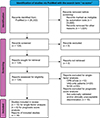 |
Figure 1 PRISMA diagram. |
Significant patient factors pre-VA ECMO
Studies of VA ECMO patient selection parameters often examine a collection of standalone physiologic or clinical patient factors among patients who received ECMO and assess if they are statistically significant in determining patient mortality. The data-extraction summary of the 13 papers analyzed in this section is found in Appendix Tables B, C, and D.
In a single-center retrospective cohort study [31] examining in-hospital cardiac arrest (IHCA) patients, the authors recommended following a decision tree involving initial rhythm, low-flow duration, and age to help identify candidates for IHCA ECMO.
In an IHCA ECMO meta-analysis [32] with 856 patients initial shockable rhythm (49.5% vs. 37.2%, OR 1.65, 95% CI: 1.05–2.61; p = 0.03), shorter low-flow time (28.7 ± 4.1 vs. 46.1 ± 5.1 min, p < 0.00001), lower pre-ECMO lactate (6.9 ± 0.8 vs. 11.0 ± 0.50 mmol/L, p < 0.0001), lower SOFA scores (PMD −1.71 [−2.93, −0.50], p = 0.006), and lower pre-ECMO creatinine (1.11 ± 0.05 vs. 1.48 ± 0.06 mg/dL, p = 0.003) were found to predict better patient outcomes. Good neurological outcomes, defined as the ability to perform independent activities of daily living at discharge, were predicted by shorter low-flow duration and lower pre-ECMO lactate levels (OR 1.04, 95% CI: 1.00–1.08, and OR 1.31, 95% CI: 1.13–1.52), respectively [32].
In another single-center retrospective cohort study [33] examining PC shock patients, the only two independent risk factors for 90-day mortality after multivariable analysis were the pre-ECMO ischemic heart disease (IHD) and arterial lactate [33]. Pre-ECMO arterial lactate in survivors was between 2.0 and 8.6 (4.0 on average), and between 5.4 and 14.9 (8.0 on average) in non-survivors [33]. Patients with a pre-ECMO arterial lactate of >10 mmol/L had much worse outcomes (p < 0.001), and all patients with lactates of 15 mmol/L and greater died within 20 days of ECMO initiation [33]. Ninety-day survival rates differed significantly between patients with and without IHD (23% vs. 69%, p < 0.001) [33].
Given low survival rates, PC ECMO in patients over 70 years of age remains controversial and has been examined in an extensive systematic review and meta-analysis by Biancari et al. (n = 781) [31]. Upon univariate analysis, arterial lactate >6 mmol/L before initiating VA ECMO predicted hospital mortality, with age > 70 years associated with hospital death (p < 0.001), death during VA ECMO (p < 0.001), renal replacement therapy (p = 0.025), longer ECMO duration (p = 0.043), and longer ICU stay (p < 0.001) [34].
In a large ELSO registry analysis [35] (n = 15,172) of age and VA ECMO outcomes, the authors used the 18–29 year old age group as the reference group and found that adverse age-related outcomes on VA ECMO occur as early as 40 years. The primary diagnoses of these patients before VA ECMO were non-specific cardiogenic shock (29.6%), acute myocardial infarction (7.8%), congestive heart failure (5.6%), and PC ECMO (4.4%) [35].
In the PELS-1 retrospective multi-center study [36] on PC VA ECMO (n = 2058), the authors modeled significant patient factors affecting in-hospital mortality at each phase of PC ECMO. In all four models, cardiac arrest and age are associated with in-hospital mortality [36]. Post-discharge mortality is associated with atrial fibrillation, older age (HR: 1.03 [95% CI: 1.02–1.05]), postoperative acute kidney injury (HR: 1.37, [95% CI: 1.01–1.95]), emergency surgery, type of surgery, and septic shock (HR: 2.53, [95%CI: 1.42–4.53]) [36].
A 2024 individual patient data meta-analysis [37] (n = 1269) showed that arterial lactate levels at VA ECMO initiation were lower in survivors. The study found that arterial lactate levels before initiation should not exceed 6.8 mmol/L, with in-hospital mortality rates of 76.7% compared to 55.7% (p < 0.0001) [37]. The article further details that in-hospital mortality in patients >70 years of age with a pre-ECMO lactate of ≥6.8 mmol/L was 85.2%, and should be considered very conservatively for ECMO treatment [37].
Another retrospective single-center study [38] (n = 152) found that the initial pre-ECMO blood lactate level greater than 6.25 mmol/L showed moderate discrimination for mortality (AUROC: 0.731). This study also found that a lower admission sequential organ failure assessment (SOFA) score and the presence of atrial fibrillation had prognostic value for PC ECMO [38].
In a smaller retrospective ELSO registry analysis study [39] (n = 96) analyzing calcium channel blocker toxicity patients on VA ECMO, pre-ECMO renal replacement therapy (OR: 10.08, 95% CI: 1.95–52.00, p = 0.006) and pre-ECMO acidosis with pH < 7.1 (OR: 3.87, 95% CI: 1.15–12.99, p = 0.028) were found to be significantly associated with in-hospital mortality using multivariate analysis.
Another retrospective multivariate analysis of the CS: utility and efficacy of device therapy (RESCUE) registry [40] (n = 789) for all VA ECMO indications found that in hospital mortality was predicted by older age (OR: 1.019, p = 0.007), chronic liver disease (OR: 8.87, p = 0.04), pre-ECMO cardiac arrest (OR: 2.76, p = 0.006), elevated total bilirubin (OR: 1.093, p < 0.0001) with pre-ECMO sinus rhythm having a protective effect (OR: 0.374, p = 0.006). It was also noted that PC ECMO patients had the highest mortality rates (37.2% vs. 28.9%; p = 0.02) [40]. Older age was found to be significant for in-hospital mortality, with the average age of survivors being 52.1 years and non-survivors 56.7 years (p < 0.0001) [40].
A 2022 systematic review and meta-analysis [41] of 1162 VA ECMO patients with ST-elevated myocardial infarction (STEMI) complicated by CS found that anterior wall infarction (OR: 1.69, 95% CI: 1.37–2.07), longer time from arrest to ECMO (OR: 1.63, 95% CI: 1–2.66), BMI >25 kg/m2 (OR: 3.9, 95% CI: 0.92–17.25), lactate >8 mmol/L (OR: 2.90, 95% CI: 0.36–23.61), longer CPR time (OR: 1.85, 95% CI:1.21–2.83), and age > 65 years (OR: 2.50, 95% CI: 1.48–4.24) were predictors of mortality with attainment of TIMI-3 flow after PCI being protective (OR: 0.12, 95% CI: 0.04–0.34).
A single-center retrospective study [42] (n = 177) examining 1-year outcomes of non-surgical VA ECMO patients found that only ECPR was independently associated with increased mortality (OR: 3.67, 95% CI: 1.66–8.31, p < 0.01).
VA ECMO post-heart transplant for early graft dysfunction (EGD) is becoming more popular [43]. A 2023 systematic review and meta-analysis [43] analysing aggregate and individual patient data for 1477 patients showed that older recipient age (OR: 1.02, 95% CI: 1.01–1.04) and older donor age (OR: 1.01, 95% CI: 100–1.03) slightly increased short-term and 1-year mortality while prior sternotomy had a more significant association with mortality (OR: 1.57, 95% CI: 0.99–2.49) [43].
Results of single factor analysis
When looking at VA ECMO criteria generalized to all indications, a few parameters appeared recurrently as significant for mortality (see Table B). These parameters were longer low-flow time (significant in 2 papers), higher pre-ECMO lactate (significant in 6 papers), higher SOFA score (significant in 2 papers), higher pre-ECMO creatinine (significant in 3 papers), older age (significant in 7 papers), and pre-ECMO cardiac arrest (significant in 3 papers). The only indication that had any factors repeated at least twice in the studies reviewed was PC ECMO, as it was the most studied VA ECMO indication. The significant pre-ECMO factors for PC ECMO were lower pre-ECMO lactate (significant in 4 papers), lower pre-ECMO creatinine (significant in 2 papers), and older age (significant in 2 papers).
VA ECMO prognostic score analysis and results
There are at least 16 prognostic scores for VA ECMO patients, of which few have been externally validated [44]. The most common variables included in prognostic scores are age, lactate, creatinine, bilirubin, and the number of days of mechanical ventilation before ECMO, in that order [44]. This paper will focus only on ECMO scores that have been externally validated with clinically acceptable discrimination for VA ECMO selection: the SAVE score, the modified SAVE score, the 6-h PREDICT VA ECMO score, and the 12-h PREDICT VA ECMO score [44].
ELSO briefly mentions VA ECMO prognostic scores, with the greatest coverage of the SAVE score [17]. The SAVE score was developed using ELSO registry data and is utilized for VA ECMO survival prediction, except for PC ECMO and ECPR (see Appendix Table A) [17, 45]. The International Society of Heart and Lung Transplantation (ISHLT) and the Heart Failure Society of America (HFSA) guidelines state that the Simplified Acute Physiology Score (SAPS)-II and the SAVE score are superior to other scores in predicting survival to discharge in VA ECMO patients [46, 47]. The SAVE score has been both internally and externally validated, demonstrating moderate external and internal discrimination for all VA ECMO indications, with near-perfect calibration internally and mild over-prediction of risk externally (Table 5) [26, 45]. According to a retrospective analysis of the ELSO registry [26], the SAVE score shows excellent discrimination with an area under the receiver operating characteristics (AUROC) of 0.90 (95% CI: 0.85–0.95). Another retrospective single-center study [28] analyzing 120 patients found that VA ECMO survivors had a significantly higher SAVE score compared to non-survivors. This study also found that SAVE score risk classes overpredicted mortality, as patients who fit into risk classes II–V exhibited higher survival rates than predicted by the SAVE score (II: 67% vs. 58%, III: 78% vs. 42%, IV: 61% vs. 30%, V: 29% vs. 18%) which could lead to exclusion of patients who would benefit from VA ECMO. The SAVE score demonstrated good discrimination (c = 0.77, 95% CI: 0.69–0.86, p < 0.001) in this cohort [28, 48]. It is important to note that the SAVE score was not validated in ECPR patients in this study, but did include PC ECMO patients [28]. The SAVE score between ECPR patients who survived vs. those who did not survive did not significantly differ (−10.2 ± 4.0 vs. −12.8 ± 5.2, p = 0.198) [28]. In another analysis [27], the discriminatory performance of the SAVE score was found to be better in cohorts without ECPR patients compared to cohorts with ECPR patients (c = 0.74, 95% CI: 0.59–0.84; vs. c = 0.70, 95% CI: 0.64–0.75). The SAVE score has shown superior predictive power for 30-day mortality of VA ECMO patients (HR: 1.06 (95% CI: 1.03–1.09), p < 0.001) as compared to other VA ECMO prognostic scores [26]. It has been externally validated over 20 times [27]. A criticism of the SAVE score is its tendency to overestimate mortality rates, particularly in low to moderate risk classes [27, 28, 49]. SAVE score mortality rates from classes I–V require discrimination testing for diagnostic use.
Externally validated VA ECMO scores with statistical information.
The modified SAVE score, which includes lactate levels in the SAVE score, has also shown promise for VA ECMO prognostication (see Appendix Table E). In a retrospective cohort study [29] of 154 patients who received VA ECMO in the emergency department (ED), including ECPR, the SAVE score (HR: 0.92, 95% CI: 0.88–0.96, p = 0.001) and lactate level (HR: 1.01, 95% CI: 1.01–1.01, p < 0.001) were independently associated with VA ECMO patient outcomes. The modified SAVE score demonstrated good discrimination (AUROC 0.84) for predicting outcomes in the ED [29]. A 2021 single-center retrospective study [50] conducted to validate the modified SAVE score (n = 126) found that the modified SAVE score showed greater discrimination and outperformed the SAVE score in all VA ECMO indications (c = 0.736 (95% CI: 0.643–0.829), p < 0.001; vs. c = 0.610 (95% CI: 0.509–0.712), p = 0.040 respectively). This effect was particularly pronounced in PC and ECPR patients (see Table 5) [50]. Further research is needed to assess the predictive value of the modified SAVE score risk classes, as well as to conduct more extensive external validation of model discrimination.
The PREDICT VA ECMO score uses lactate, pH, and bicarbonate values at 6 h or 12 h into VA ECMO to predict hospital mortality [30]. This criterion originates from a single-center study analyzing 205 VA ECMO patients, with no consideration given to indication, and demonstrates good discrimination (after 6 h: AUROC 0.718; after 12 h: AUROC 0.735) [30]. The PREDICT score is dynamic and can be used for CS and ECPR patients [30]. The PREDICT score showed superior discrimination compared to the SAVE score (AUROC: 0.823 vs. 0.686) in 6-h ECMO survivors [30]. It is essential to note that the PREDICT score is specifically designed to assess the outcomes of patients on ECMO and does not utilize values before ECMO initiation to predict survival, thereby limiting its application in decision-making for ECMO initiation [30].
ECMO decision-making mechanisms: A multidisciplinary process
The ISHLT and the HFSA advocate for a multidisciplinary team-based initiation approach to maximize patient survival on ECMO [46]. Multidisciplinary evaluation for patient selection by a shock team utilizing algorithms is a class I recommendation for decision-making around the allocation of acute mechanical circulatory support (MCS) [46].
The most notable benefit of an ECMO group is that all members have expertise in ECMO, and all involved disciplines can voice their concerns and contribute to determining solutions before a final decision is made. In the few studies available, formalized multidisciplinary ECLS teams including perfusionists, respiratory therapists, and nurses have been shown to improve survival in retrospective studies [51, 52]. A retrospective study [52] (n = 70) compared survival rates of ARDS ECMO patients before and after institution of a formalized ECMO team and found that ICU mortality (72.9 vs. 50.0%, p = 0.012) and in-hospital mortality (75.7 vs. 52.2%, p = 0.009) were significantly down in the ECMO team era [52]. Significantly more ECMO patients were weaned (42.9 vs. 65.2%, p = 0.018) with a substantial decline in 1-year mortality (37.8 vs. 14.3%, p = 0.005) [52].
In another retrospective chart review study [51] (n = 279), the development of an ECMO team also significantly increased survival to discharge (37.7% vs. 52.3%, p = 0.02). In this study, the multidisciplinary ECMO team consisted of perfusionists, intensivists, respiratory therapists, ICU nurses, cardiac surgeons, cardiac anesthesiologists, nutritionists, physical therapists, occupational therapists, a cardiology heart failure specialist, and an ethics committee member [51]. These results are promising and merit further study.
Multidisciplinary consultation before VA ECMO initiation is a formalized process involving all groups directing the patient’s care once they are on ECMO (i.e., intensivists, cardiothoracic surgeons, perfusionists, advanced practice providers (APPs), etc.). A clinical ethicist should also be present to offer their expertise and mediate discussions as needed [46, 53]. All participants can communicate their concerns and have them documented formally. A scenario where this may not be practical is ECMO initiations on cardiac arrest patients, necessitating quick decision-making. It is appropriate to have one ECMO physician make this decision in this instance after consulting the patient selection criteria. In high-risk patients, ECMO eligibility should be pre-emptively discussed before procedures or treatment, allowing for a well-informed decision to be made before a cardiorespiratory event occurs. The decision should be formally documented and put into the patient’s chart under their code status. A streamlined process for VA ECMO decision-making, concentrated in the hands of staff with expertise in ECMO, is needed. This approach presents numerous possibilities for optimizing patient selection for ECMO at the site level.
Limitations and future directions
The body of research on VA ECMO selection criteria primarily consists of retrospective or prospective observational single-center or multi-center studies, supplemented by some systematic reviews or meta-analyses of these studies. There is a paucity of high-quality, randomized studies with large sample sizes on VA ECMO patient selection criteria, an issue also mentioned in ELSO’s VA ECMO recommendations article and other articles [17, 32]. Studies that analyze patient selection data and scores use data from patients who went on VA ECMO. No studies have compared patients with similar presentations who were not treated with VA ECMO and their outcomes with conventional medical therapy. This is a significant limitation of the research and should be an avenue for future studies to compare outcomes between patients with similar presentations who were treated with VA ECMO versus those who were not. Possible confounding factors, such as pre-ECMO Impella/VAD support or pre-ECMO CRRT affecting ECMO patient outcomes, are minimally discussed. Further research is needed to investigate how these factors impact VA ECMO patient outcomes and whether they should be considered in ECMO patient selection criteria. Independent patient data (IPD) meta-analyses on this topic are absent from the literature, which would allow for adjustment of major confounders such as pre- and post-ECMO usage of left ventricular unloading devices, use of Impella/VAD, or pre-ECMO CRRT usage [32].
There are a few VA ECMO RCTs that investigate patient selection criteria, which have hindered the development of evidence-based recommendations [15]. It is difficult to conduct RCTs for VA ECMO due to the ethics associated with denying a patient life-saving therapy to meet the condition of randomization. RCTs performed on VA ECMO indication-specific patient selection criteria will better elucidate the difference in ECMO selection needed for patients of varying indications who receive ECMO compared to those who do not. Consideration of ethics is essential for VA ECMO RCTs. Because randomization is problematic, the body of evidence is limited to retrospective and prospective studies, prognostic scores modeled after the ECMO registry and retrospective data, and expert opinion [15].
Another significant issue is the lack of standardization in selection criteria studies. Definitions for selection criteria, ECMO complications, protocols for pharmacologic management, use of selection criteria, sample sizes, timing of initiation, indications treated with ECMO, use of an ECMO data registry, data availability from other centers, and mechanisms for decision-making differ significantly by study and center [14–16]. This makes the data produced hard to compare, reproduce, and statistically model in a meaningful way. Standardization of study methodology and definitions is paramount in conducting VA ECMO patient selection studies moving forward to draw meaningful conclusions.
Guidance of VA ECMO patient selection decisions using clinical and research-backed criteria can improve ECMO patient outcomes at sites delivering ECMO therapy. All ECMO centers should adopt patient selection criteria to guide cannulation decisions; it is no longer acceptable to provide this high-risk, life-saving therapy without pre-established criteria to inform the decision-making process.
One retrospective study [36] pointed out that following strict criteria for VA ECMO selection at their site would have resulted in not offering the therapy to 58% of ineligible patients who received ECMO and survived. This problem exists in part because current ECMO eligibility criteria are based on ECMO type (i.e., VA, VV, ECPR), when ECMO patient selection criteria should be personalized based on patient pathology, not ECMO type. Significantly more study is needed on indication-specific ECMO patient selection criteria, which could lead to better ECMO patient outcomes. This is especially critical for special patient groups such as drug overdose patients, post-heart and/or lung transplant patients, patients with neoplasms, pregnant patients, and post-partum patients. Few studies are available for these groups, and the available studies have small sample sizes [39, 43, 54, 55].
Healthcare implications: Proposed VA ECMO patient selection criteria
Based on existing research, the most promising VA ECMO patient selection criteria for all VA ECMO indications, excluding ECPR and PC ECMO, is the SAVE score. The SAVE score has been rigorously externally validated compared to other VA ECMO scores. Additional research on the discrimination of the SAVE score risk classes in patient cohorts that exclude PC ECMO and ECPR is needed. Most studies tested patient cohorts without either PC ECMO patients or ECPR patients, but not both. A study by Schmidt et al. [26], which excluded PC ECMO and ECPR patients, demonstrated high discrimination of the SAVE score (AUROC: 0.90).
For PC ECMO and ECPR indications, the modified SAVE score has shown good discrimination (ECPR: AUROC 0.84, PC ECMO: c = 0.744, p < 0.001) [29, 50]. The inclusion of lactate in the selection criteria has value in emergency scenarios such as PC ECMO and ECPR. In PC ECMO, the modified SAVE score has demonstrated superior discrimination compared to the SAVE score (AUROC: 0.695 vs. 0.672) [56]. Further research is needed to externally validate the modified SAVE score in PC ECMO and ECPR patient cohorts, while predictive value should be assessed for each risk class.
VA ECMO universal criteria: Feasible?
Currently, universal selection criteria have insufficient evidentiary support. The existing research base for ECMO patient selection criteria is burdened with low-level evidence, and indication-specific studies and decision-making mechanism studies are too nascent to produce conclusive directives. Other factors that further complicate standardization include regional patient heterogeneity, diverse clinical settings, proximity to a transplant center, expanding and diverse patient pathologies considered for ECMO, and resource availability. In theory, universal ECMO criteria should improve efficiency of resource use, reduce costs to healthcare systems, and ameliorate most ethical considerations around which patients receive ECMO by introducing standardization. Universal VA ECMO prognostic criteria could be feasible with a stronger body of evidence (i.e., RCTs and meta-analyses of RCTs), greater gathering and sharing of standardized data across centers and healthcare systems nationally, standardization of study format with well-defined selection criteria used, and statistical modeling and external validation of prognostic scores.
Conclusion
Adult VA ECMO patient selection criteria and the mechanism by which ECMO initiation decisions are made remain the most significant challenge to decreasing patient mortality on VA ECMO. There are substantial weaknesses in the existing research on patient selection criteria, including the use of small sample sizes, a lack of RCTs, a lack of study standardization, a lack of personalization of ECMO initiation decisions based on patient pathology, and conducting studies on patients who received ECMO without including patient groups that were considered for ECMO but did not receive it. Among the available studies, the SAVE score has shown the greatest promise in selecting VA ECMO patients, excluding those undergoing ECPR and PC ECMO. The modified SAVE score has shown the greatest promise in selecting ECPR and PC ECMO patients for VA ECMO. The consultation of a multidisciplinary ECMO team, which collectively makes decisions about ECMO candidacy, has shown significantly increased patient survival outcomes compared to a one- or two-physician decision-making mechanism for VA ECMO initiation. There is currently insufficient support for universal VA ECMO selection criteria, which could be feasible in the future with a stronger body of research evidence.
Abbreviations
VA ECMO: Venoarterial extracorporeal membrane oxygenation
ECMO: Extracorporeal membrane oxygenation
SAVE score: Survival after venoarterial ECMO score
ECPR: Extracorporeal cardiopulmonary resuscitation
PC: Postcardiotomy
VV: Venovenous
VAD: Ventricular assist device
ELSO: Extracorporeal Life Support Organization
CS: Cardiogenic shock
CPB: Cardiopulmonary bypass
IHCA: In-hospital cardiac arrest
IHD: Ischemic heart disease
SOFA: Sequential Organ Failure Assessment
STEMI: ST-Elevated myocardial infarction
EGD: Early graft dysfunction
ISHLT: International Society of Heart and Lung Transplantation
HFSA: Heart Failure Society of America
SAPS: Simplified Acute Physiology Score
Funding
The author received no funding to complete this research.
Conflicts of interest
The author declares no conflict of interest.
Data availability statement
Data are available in the appendices.
Author contribution statement
The sole author designed the study, collected the data, analyzed the results, and wrote the paper.
Ethics approval
This study does not involve human and/or animal subjects; therefore, ethical approval was not required.
References
- Richardson AC, Tonna JE, Nanjayya V, et al. Extracorporeal cardiopulmonary resuscitation in adults. Interim guideline consensus statement from the Extracorporeal Life Support Organization. ASAIO J 2021;67(3):221. https://doi.org/10.1097/MAT.0000000000001344. [Google Scholar]
- Burrell A, Kim J, Alliegro P, et al. Extracorporeal membrane oxygenation for critically ill adults. Cochrane Database Syst Rev. 2023;(9). https://doi.org/10.1002/14651858.CD010381.pub3. [Google Scholar]
- Tonna JE, Abrams D, Brodie D, et al. Management of adult patients supported with venovenous extracorporeal membrane oxygenation (VV ECMO): guideline from the Extracorporeal Life Support Organization (ELSO). ASAIO J. 2021;67(6):601. https://doi.org/10.1097/MAT.0000000000001432. [Google Scholar]
- Lorusso R, Whitman G, Milojevic M, et al. 2020 EACTS/ELSO/STS/AATS expert consensus on post-cardiotomy extracorporeal life support in adult patients. ASAIO J. 2021;67(1):e1. https://doi.org/10.1097/MAT.0000000000001301. [Google Scholar]
- Kang HR, Kim DJ, Lee J, et al. A comparative analysis of survival prediction using PRESERVE and RESP scores. Ann Thoracic Surg. 2017;104(3):797–803. https://doi.org/10.1016/j.athoracsur.2017.01.052. [Google Scholar]
- Joshi H, Flanagan M, Subramanian R, Drouin M. Respiratory ECMO survival prediction (RESP) score for COVID-19 patients treated with ECMO. ASAIO J. 2022;68(4):486. https://doi.org/10.1097/MAT.0000000000001640. [Google Scholar]
- Lo Coco V, Lorusso R, Raffa GM, et al. Clinical complications during veno-arterial extracorporeal membrane oxygenation in post-cardiotomy and non post-cardiotomy shock: still the achille’s heel. J Thorac Dis. 2018;10(12):6993–7004. https://doi.org/10.21037/jtd.2018.11.103. [Google Scholar]
- Vyas A, Bishop MA. Extracorporeal membrane oxygenation in adults. In: StatPearls. StatPearls Publishing; 2024. Accessed June 2, 2024. http://www.ncbi.nlm.nih.gov/books/NBK576426/. [Google Scholar]
- Rao P, Khalpey Z, Smith R, Burkhoff D, Kociol RD. Venoarterial extracorporeal membrane oxygenation for cardiogenic shock and cardiac arrest. Circul Heart Failure. 2018;11(9):e004905. https://doi.org/10.1161/CIRCHEARTFAILURE.118.004905. [Google Scholar]
- Biancari F, Mariscalco G, Dalén M, et al. Six-month survival after extracorporeal membrane oxygenation for severe COVID-19. J Cardiothorac Vasc Anesth. 2021;35(7):1999–2006. https://doi.org/10.1053/j.jvca.2021.01.027 [Google Scholar]
- Tonna JE, Boonstra PS, MacLaren G, et al. Extracorporeal Life Support Organization registry international report 2022: 100,000 survivors. ASAIO J. 2024;70(2):131. https://doi.org/10.1097/MAT.0000000000002128. [Google Scholar]
- Rossong H, Debreuil S, Yan W, et al. Long-term survival and quality of life after extracorporeal membrane oxygenation. J Thoracic Cardiovasc Surg. 2023;166(2):555–566.e2. https://doi.org/10.1016/j.jtcvs.2021.10.077. [Google Scholar]
- Posluszny J, Engoren M, Napolitano LM, Rycus PT, Bartlett RH. Predicting survival of adult respiratory failure patients receiving prolonged (≥14 Days) extracorporeal membrane oxygenation. ASAIO J. 2020;66(7):825. https://doi.org/10.1097/MAT.0000000000001067. [Google Scholar]
- Loungani RS, Fudim M, Ranney D, et al. Contemporary use of venoarterial extracorporeal membrane oxygenation: insights from the multicenter RESCUE registry. J Card Fail. 2021;27(3):327–337. https://doi.org/10.1016/j.cardfail.2020.11.026. [Google Scholar]
- Banga S, Challa A, Patel AR, Singh S, Emani VK. The patient selection criteria for veno-arterial extracorporeal mechanical oxygenation. Cureus. 2019;11(9):e5709. https://doi.org/10.7759/cureus.5709. [Google Scholar]
- ECMO Committee A. Principles of Patient Selection – Alfred ECMO Guideline. Accessed May 18, 2024. https://ecmo.icu/clinical-application-of-ecmo-principles-of-patient-selection/. [Google Scholar]
- Lorusso R, Shekar K, MacLaren G, et al. ELSO interim guidelines for venoarterial extracorporeal membrane oxygenation in adult cardiac patients. ASAIO J. 2021;67(8):827. https://doi.org/10.1097/MAT.0000000000001510. [Google Scholar]
- Hochman JS, Sleeper LA, Godfrey E, et al. Should we emergently revascularize occluded coronaries for cardiogenic shock: an international randomized trial of emergency PTCA/CABG—trial design. Am Heart J. 1999;137(2):313–321. https://doi.org/10.1053/hj.1999.v137.95352. [Google Scholar]
- Thiele H, Zeymer U, Thelemann N, et al. Intraaortic balloon pump in cardiogenic shock complicating acute myocardial infarction. Circulation. 2019;139(3):395–403. https://doi.org/10.1161/CIRCULATIONAHA.118.038201. [Google Scholar]
- Bauer T, Zeymer U, Hochadel M, et al. Use and outcomes of multivessel percutaneous coronary intervention in patients with acute myocardial infarction complicated by cardiogenic shock (from the EHS-PCI Registry). Am J Cardiol. 2012;109(7):941–946. https://doi.org/10.1016/j.amjcard.2011.11.020. [Google Scholar]
- Ponikowski P, Voors AA, Anker SD, et al. 2016 ESC Guidelines for the diagnosis and treatment of acute and chronic heart failure: the task force for the diagnosis and treatment of acute and chronic heart failure of the European Society of Cardiology (ESC)Developed with the special contribution of the Heart Failure Association (HFA) of the ESC. Eur Heart J. 2016;37(27):2129–2200. https://doi.org/10.1093/eurheartj/ehw128. [Google Scholar]
- Lee JM, Rhee TM, Hahn JY, et al. Multivessel percutaneous coronary intervention in patients with ST-segment elevation myocardial infarction with cardiogenic shock. J Am Coll Cardiol. 2018;71(8):844–856. https://doi.org/10.1016/j.jacc.2017.12.028. [Google Scholar]
- Kim MC, Jeong MH, Sim DS, et al. Optimal timing of percutaneous coronary intervention in patients with non–ST-segment elevation myocardial infarction complicated by acute decompensated heart failure (from the Korea Acute Myocardial Infarction Registry-National Institutes of Health [KAMIR-NIH]). Am J Cardiol. 2018;121(11):1285–1292. https://doi.org/10.1016/j.amjcard.2018.01.051. [Google Scholar]
- Whitman GJR. Extracorporeal membrane oxygenation for the treatment of postcardiotomy shock. J Thoracic Cardiovasc Surg. 2017;153(1):95–101. https://doi.org/10.1016/j.jtcvs.2016.08.024. [Google Scholar]
- Samuels LE. Pharmacological criteria for ventricular assist device insertion following postcardiotomy shock: experience with the Abiomed BVS System. J Cardiac Surg. 1999. Accessed May 28, 2025. https://doi.org/10.1111/j.1540-8191.1999.tb00996.x?sid=nlm%3Apubmed. [Google Scholar]
- Schmidt M, Burrell A, Roberts L, et al. Predicting survival after ECMO for refractory cardiogenic shock: the survival after veno-arterial-ECMO (SAVE)-score. Eur Heart J. 2015;36(33):2246–2256. https://doi.org/10.1093/eurheartj/ehv194. [Google Scholar]
- Pladet LCA, Barten JMM, Vernooij LM, et al. Prognostic models for mortality risk in patients requiring ECMO. Intensive Care Med. 2023;49(2):131–141. https://doi.org/10.1007/s00134-022-06947-z [Google Scholar]
- Amin F, Lombardi J, Alhussein M, et al. Predicting survival after VA-ECMO for refractory cardiogenic shock: validating the SAVE score. CJC Open. 2021;3(1):71–81. https://doi.org/10.1016/j.cjco.2020.09.011. [Google Scholar]
- Chen WC, Huang KY, Yao CW, et al. The modified SAVE score: predicting survival using urgent veno-arterial extracorporeal membrane oxygenation within 24 hours of arrival at the emergency department. Crit Care. 2016;20(1):336. https://doi.org/10.1186/s13054-016-1520-1. [Google Scholar]
- Wengenmayer T, Duerschmied D, Graf E, et al. Development and validation of a prognostic model for survival in patients treated with venoarterial extracorporeal membrane oxygenation: the PREDICT VA-ECMO score. Eur Heart J Acute Cardiovasc Care. 2019;8(4):350–359. https://doi.org/10.1177/2048872618789052. [Google Scholar]
- Bourcier S, Desnos C, Clément M, et al. Extracorporeal cardiopulmonary resuscitation for refractory in-hospital cardiac arrest: a retrospective cohort study. Int J Cardiol. 2022;350:48–54. https://doi.org/10.1016/j.ijcard.2021.12.053. [Google Scholar]
- D’Arrigo S, Cacciola S, Dennis M, et al. Predictors of favourable outcome after in-hospital cardiac arrest treated with extracorporeal cardiopulmonary resuscitation: a systematic review and meta-analysis. Resuscitation. 2017;121:62–70. https://doi.org/10.1016/j.resuscitation.2017.10.005. [CrossRef] [Google Scholar]
- Fux T, Holm M, Corbascio M, Lund LH, Van Der Linden J. Venoarterial extracorporeal membrane oxygenation for postcardiotomy shock: risk factors for mortality. J Thoracic Cardiovasc Surg. 2018;156(5):1894–1902.e3. https://doi.org/10.1016/j.jtcvs.2018.05.061. [Google Scholar]
- Biancari F, Saeed D, Fiore A, et al. Postcardiotomy venoarterial extracorporeal membrane oxygenation in patients aged 70 years or older. Ann Thorac Surg. 2019;108(4):1257–1264. https://doi.org/10.1016/j.athoracsur.2019.04.063. [Google Scholar]
- Fernando SM, MacLaren G, Barbaro RP, et al. Age and associated outcomes among patients receiving venoarterial extracorporeal membrane oxygenation-analysis of the Extracorporeal Life Support Organization registry. Intensive Care Med. 2023;49(12):1456–1466. https://doi.org/10.1007/s00134-023-07199-1. [Google Scholar]
- Mariani S, Heuts S, Van Bussel BCT, et al. Patient and management variables associated with survival after postcardiotomy extracorporeal membrane oxygenation in adults: the PELS-1 multicenter cohort study. J Am Heart Assoc. 2023;12(14):e029609. https://doi.org/10.1161/JAHA.123.029609. [Google Scholar]
- Biancari F, Kaserer A, Perrotti A, et al. Hyperlactatemia and poor outcome after postcardiotomy veno-arterial extracorporeal membrane oxygenation: an individual patient data meta-analysis. Perfusion. 2024;39(5):956–965. https://doi.org/10.1177/02676591231170978. [Google Scholar]
- Laimoud M, Machado P, Lo MG, Maghirang MJ, Hakami E, Qureshi R. The absolute lactate levels versus clearance for prognostication of post-cardiotomy patients on veno-arterial ECMO. ESC Heart Fail. 2024;11(6):3511–3522. https://doi.org/10.1002/ehf2.14910. [Google Scholar]
- Subramanian R, Roebuck A, Joshi H, Drouin M. Predictors of mortality in adults with calcium channel blocker toxicity receiving extracorporeal membrane oxygenation support: an Extracorporeal Life Support Organization registry analysis. ASAIO J. https://doi.org/10.1097/MAT.0000000000002307. [Google Scholar]
- Vigneshwar NG, Kohtz PD, Lucas MT, et al. Clinical predictors of in-hospital mortality in venoarterial extracorporeal membrane oxygenation. J Card Surg. 2020;35(10):2512–2521. https://doi.org/10.1111/jocs.14758. [Google Scholar]
- Pang S, Miao G, Zhao X. Effects and safety of extracorporeal membrane oxygenation in the treatment of patients with ST-segment elevation myocardial infarction and cardiogenic shock: a systematic review and meta-analysis. Front Cardiovasc Med. 2022;9:963002. https://doi.org/10.3389/fcvm.2022.963002. [Google Scholar]
- Ingvarsdottir IL, Westerlind A, Lepore I, Gudbjartsson T, Redfors B, Dellgren G. Cardiogenic shock and extracorporeal membrane oxygenation: etiology and 1-year survival. Scand Cardiovasc J. 2025;59(1):2481179. https://doi.org/10.1080/14017431.2025.2481179. [Google Scholar]
- Aleksova N, Buchan TA, Foroutan F, et al. Extracorporeal membrane oxygenation for graft dysfunction early after heart transplantation: a systematic review and meta-analysis. J Card Fail. 2023;29(3):290–303. https://doi.org/10.1016/j.cardfail.2022.11.011. [Google Scholar]
- Giordano L, Francavilla A, Bottio T, et al. Predictive models in extracorporeal membrane oxygenation (ECMO): a systematic review. Syst Rev. 2023;12(1):44. https://doi.org/10.1186/s13643-023-02211-7. [Google Scholar]
- Pladet L, Luijken K, Fresiello L, et al. Clinical decision support for extracorporeal membrane oxygenation: Will we fly by wire? Perfusion. 2023;38(1 Suppl):68–81. https://doi.org/10.1177/02676591231163688. [Google Scholar]
- Bernhardt AM, Copeland H, Deswal A, et al. The International Society for Heart and Lung Transplantation/Heart Failure Society of America Guideline on acute mechanical circulatory support. J Heart Lung Transplant. 2023;42(4):e1-e64. https://doi.org/10.1016/j.healun.2022.10.028. [Google Scholar]
- Peigh G, Cavarocchi N, Keith SW, Hirose H. Simple new risk score model for adult cardiac extracorporeal membrane oxygenation: simple cardiac ECMO score. J Surg Res. 2015;198(2):273–279. https://doi.org/10.1016/j.jss.2015.04.044. [Google Scholar]
- Schrutka L, Rohmann F, Binder C, et al. Discriminatory power of scoring systems for outcome prediction in patients with extracorporeal membrane oxygenation following cardiovascular surgery. Eur J Cardiothorac Surg. 2019;56(3):534–540. https://doi.org/10.1093/ejcts/ezz040. [Google Scholar]
- Fisser C, Rincon-Gutierrez LA, Enger TB, et al. Validation of prognostic scores in extracorporeal life support: a multi-center retrospective study. Membranes. 2021;11(2):2. https://doi.org/10.3390/membranes11020084. [Google Scholar]
- Santore LA, Schurr JW, Noubani M, et al. SAVE score with lactate modification predicts in-hospital mortality in patients with ongoing cardiac arrest during VA-ECMO cannulation. Int J Artif Organs. 2021;44(10):787–790. https://doi.org/10.1177/03913988211021878. [Google Scholar]
- Dalia AA, Ortoleva J, Fiedler A, Villavicencio M, Shelton K, Cudemus GD. Extracorporeal membrane oxygenation is a team sport: institutional survival benefits of a formalized ECMO team. J Cardiothorac Vasc Anesth. 2019;33(4):902–907. https://doi.org/10.1053/j.jvca.2018.06.003. [Google Scholar]
- Na SJ, Chung CR, Choi HJ, et al. The effect of multidisciplinary extracorporeal membrane oxygenation team on clinical outcomes in patients with severe acute respiratory failure. Ann Intensive Care. 2018;8(1):31. https://doi.org/10.1186/s13613-018-0375-9. [Google Scholar]
- Stephens AL, Bruce CR. Setting Expectations for ECMO: improving communication between clinical teams and decision makers. Methodist Debakey Cardiovasc J. 2018;14(2):120–125. https://doi.org/10.14797/mdcj-14-2-120. [Google Scholar]
- Duburcq T, Goutay J, Preau S, et al. Venoarterial extracorporeal membrane oxygenation in severe drug intoxication: a retrospective comparison of survivors and nonsurvivors. ASAIO J. 2022;68(7):907. https://doi.org/10.1097/MAT.0000000000001583. [Google Scholar]
- Webster CM, Smith KA, Manuck TA. Extracorporeal membrane oxygenation in pregnant and postpartum women: a ten-year case series. Am J Obstet Gynecol MFM. 2020;2(2):100108. https://doi.org/10.1016/j.ajogmf.2020.100108. [Google Scholar]
- Erdoğan SB, Bastopcu M, Usca MK, Çakmak AY, Sargın M, Aka S. The utility of risk scores in postcardiotomy extracorporeal membrane oxygenation. Perfusion. 2024;39(3):578–584. https://doi.org/10.1177/02676591231154741. [Google Scholar]
Cite this article as: Johal AK Scoping review of contemporary adult enoarterial extracorporeal membrane oxygenation (VA ECMO) selection criteria and decision-making mechanisms. J Extra Corpor Technol 2026, 58, 146–163. https://doi.org/10.1051/ject/2026009.
Appendix
Breakdown of significant pre-VA-ECMO patient factors with associated indications and study details.
Breakdown of significant and insignificant pre-VA-ECMO patient factors by indication.
Breakdown of significant pre-VA-ECMO patient factors by study, and measured outcomes.
All Tables
Breakdown of significant pre-VA-ECMO patient factors with associated indications and study details.
Breakdown of significant and insignificant pre-VA-ECMO patient factors by indication.
Breakdown of significant pre-VA-ECMO patient factors by study, and measured outcomes.
All Figures
|
Figure 1 PRISMA diagram. |
| In the text | |
Current usage metrics show cumulative count of Article Views (full-text article views including HTML views, PDF and ePub downloads, according to the available data) and Abstracts Views on Vision4Press platform.
Data correspond to usage on the plateform after 2015. The current usage metrics is available 48-96 hours after online publication and is updated daily on week days.
Initial download of the metrics may take a while.